

If you do not see a download link above, you do not have access to this download. Please upgrade your plan here
All downloads are not to be shared or repurposed beyond their intended printable use.
Description
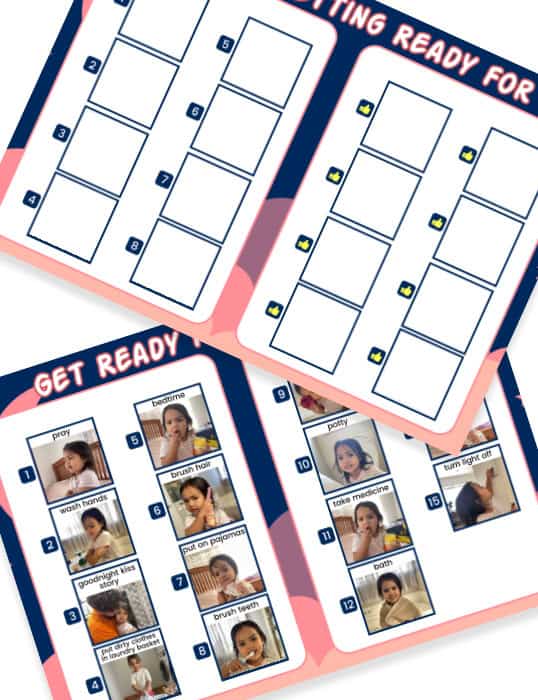
Support children to end their day calmly and confidently with this engaging “Getting Ready for Bed” Routine Pack.
Featuring interactive provocation cards, downloadable charts, and simple checklists, this resource helps tamariki follow evening routines—such as tidying up, having a bath or shower, brushing teeth, putting on pyjamas, and settling for sleep.
Designed for Early Childhood and Primary learners, these clear visual supports build independence, consistency, and self-help skills while helping children prepare for the next day. Ideal for visual learners, this pack also supports communication and understanding in inclusive and special education settings.
- Evening routines & self-help skills
- Calm transitions & readiness for sleep
- Confidence, independence & consistency
Ways to Use at Home
Bedtime Routine Support
Use charts and checklists to guide children through each step of their bedtime routine.
Calm & Predictable Evenings
Follow the same sequence each night to support relaxation and routine.
Build Independence
Encourage children to complete tasks on their own using visual prompts.
What Comes Next?
Ask children to identify the next step to build sequencing skills.
Positive Reinforcement
Celebrate completed routines to build confidence and motivation.
Ways to Use in the Classroom
End-of-Day Transitions
Use cards to support calm pack-up routines and readiness to go home.
Routine Displays
Display charts to reinforce sequencing and daily structure.
Discussion & Reflection
Talk about bedtime routines and why rest is important.
Role Play & Modelling
Act out bedtime steps to build understanding.
Sequencing Activities
Order steps from first to last (e.g. tidy up → brush teeth → pyjamas → sleep).
Inclusive Learning Ideas (Special Education Support)
Visual Schedules
Use cards as structured visual schedules to support understanding and predictability.
Choice-Making Activities
Offer simple choices (e.g. “What comes next?”) to support engagement.
Chunking Tasks
Break routines into smaller steps for easier understanding.
Repetition & Routine Practice
Use daily to build familiarity, confidence, and independence.
Hands-On Practice
Link cards to real-life actions (e.g. brushing teeth, putting on pyjamas).
One-to-One or Small Group Support
Guide learners step-by-step through routines with modelling and reassurance.
Simple. Calm. Ready for rest.