

If you do not see a download link above, you do not have access to this download. Please upgrade your plan here
All downloads are not to be shared or repurposed beyond their intended printable use.
Description
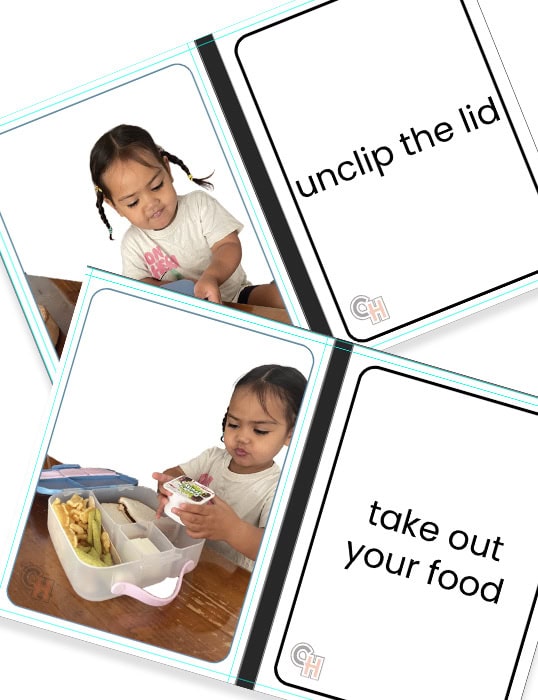
Support children in confidently opening and managing their lunch with this practical set of “Opening a Lunch Box” sequence cards.
Designed for Early Childhood and Primary learners, these downloadable cards guide tamariki through simple, step-by-step actions to open, use, and close their lunch box—building independence and self-help skills during mealtimes.
Learning to open lunchboxes independently helps children build confidence and agency, reducing anxiety during transitions into ECE or school. Practising this skill also strengthens fine motor skills, encourages responsibility for belongings, and supports children to eat confidently without relying on adults—helping create smoother lunchtime routines.
With clear, real-life visuals, this resource supports understanding, routine-building, and communication. Ideal for visual learners, these cards are also highly effective in inclusive and special education classrooms.
- Independence & self-help skills
- Sequencing & fine motor development
- Confidence & smooth transitions
Ways to Use at Home
Daily Practice
Use sequence cards to guide children through opening and closing their lunch box.
Build Independence
Encourage children to practise on their own using visual prompts.
Mealtime Routines
Include during snack or lunch time to reinforce real-life use.
Confidence Building
Celebrate success to build confidence and reduce anxiety.
Ways to Use in the Classroom
School Readiness Support
Use with children starting ECE or school to build independence at lunchtime.
Step-by-Step Modelling
Teach and practise each step together using the sequence cards.
Routine Displays
Place near eating areas as a visual guide.
Small Group Practice
Support learners to practise opening lunchboxes in guided groups.
Real-Life Application
Use during snack and lunch times for immediate, meaningful practice.
Inclusive Learning Ideas (Special Education Support)
Visual Supports & Communication
Use cards as clear visual schedules to support understanding.
Task Breakdown (Chunking)
Focus on one step at a time to reduce overwhelm.
Repetition & Routine Practice
Use daily to build familiarity, confidence, and independence.
Hands-On Practice
Practise using real lunchboxes alongside the cards.
One-to-One or Small Group Support
Guide learners step-by-step with modelling and support.
Choice & Independence
Encourage learners to try independently and make choices during routines.
Simple. Practical. Independent.
Review or comment on this resource
Please let us know what’s on your mind. Your comments help us make a better experience for you.